
 ,
Ugochukwu Kingsley Ezeani,
Anselem Ifeanyi Ukwueze*,
Augustine Obi Okeke
,
Ugochukwu Kingsley Ezeani,
Anselem Ifeanyi Ukwueze*,
Augustine Obi Okeke
The Bank of Industry (BOI) was established to provide financial and advisory support services for SMEs in the formal and informal sectors of the Nigerian economy. Several studies have been conducted to evaluate the effects of commercial banks’ credits on the growth of SMEs; however, empirical studies on the contributions of the BOI to the expansion of small businesses in Nigeria have remained inadequate. Against this backdrop, the study examined the effect of the BOI SMEs lending scheme on the growth of fashion and beauty businesses in Anambra state, from 2015 to 2025. Methodologically, the study employed a survey design, utilizing questionnaires and interviews to collect primary data. The quantitative and qualitative data were analyzed using descriptive statistics and qualitative descriptive methods. The survey results showed that the BOI SMEs lending initiative did not enhance the growth of the selected fashion and beauty enterprises in Anambra state during the study period. This is due to the BOI’s strict lending conditions, which mandated that the SMEs’ applicants must provide collateral (e.g., landed property) and high-ranking civil servants (as guarantors) as preconditions for loan procurement. The study recommends the review of the BOI lending policy to ensure that loan requirements, rates, maturities, and payback terms are flexible, complementary, and intended to enhance business profitability, stability, and growth of SMEs. The study also suggests that the operating facilities of the SMEs should be used as collateral, while the volume, frequency, and consistency of cash flows in their bank account statements should be used as a benchmark to determine the amount of money to lend to these businesses that they have the capacity to repay.
| Published in | International Journal of Sustainable Development Research (Volume 12, Issue 4) |
| DOI | 10.11648/j.ijsdr.20261204.12 |
| Page(s) | 229-242 |
| Creative Commons |
This is an Open Access article, distributed under the terms of the Creative Commons Attribution 4.0 International License (http://creativecommons.org/licenses/by/4.0/), which permits unrestricted use, distribution and reproduction in any medium or format, provided the original work is properly cited. |
| Copyright |
Copyright © The Author(s), 2026. Published by Science Publishing Group |
Bank of Industry, Lending Scheme, SMEs, Growth, Profitability
AfDB | African Development Bank |
BOI | The Bank of Industry |
BoP | Bottom of the Economic Pyramid |
CBN | Central Bank of Nigeria |
C-of-O | Certificate of Ownership |
DFIs | Development Finance Institutions |
EGP | Economic Growth Plan |
GSIC | German Society for International Cooperation |
HND | Higher National Diploma |
HNIs | High Net-Worth Individuals |
LGAs | Local Government Areas |
MSMEs | Micro, Small, and Medium-sized Enterprises |
NBCI | Nigerian Bank for Commerce and Industry |
NBS | National Bureau of Statistics |
NCE | National Certificate on Education |
NERFUND | National Economic Reconstruction Fund |
NIDB | Nigerian Industrial Development Bank |
NIRP | National Industrial Revolution Plan |
OND | Ordinary National Diploma |
PPP | Public-Private Partnership |
QSR | Quick Service Restaurants |
SDG | Sustainable Development Goal |
SMEs | Small and Medium Enterprises |
| [1] | Aduyoye, O. O., Adebola, S. O. & Binuyi, A. O. (2013). Financing small business in Ogun state, Nigeria: The critical role of small and medium enterprises development agency of Nigeria. Journal of Accounting Research, 1(1), 32-43. |
| [2] | AfDB. (2026). Nigeria: African Development Bank approves $200 million financing facility for Bank of Industry. |
| [3] | AfDB. (nd.). Investing in the creative industries: Fashionomics. |
| [4] | Agwu, M. O. & Emeti, C. I. (2014). Issues, challenges and prospects of small and medium scale enterprises (SMEs) in Port Harcourt City, Nigeria. European Journal of Sustainable Developmen, 3(1) 101-114. |
| [5] | Akerlof, G. A. (1978). The market for “lemons”: Quality uncertainty and the market mechanism. Academic Press. |
| [6] | Akingunola, R. O. (2011). Small and medium scale enterprises and economic growth in Nigeria: An assessment of financing options. Pakistan Journal of Business and Economic Review, 2(1), 78-97. |
| [7] | Alabi, Y., Awe, O. J. & Musa, L. Y. (2015). Managing small and medium scale enterprises in Nigeria: Challenges and prospects. Review of Public Administration and Management, 3(7), 92-100. |
| [8] | Anakwe, M. N. (2025). Digital transformation and innovativeness of fashion design firms in Rivers State, Nigeria. Global Journal of Engineering and Technology Advances, 25(03), 269-280. |
| [9] | Bassey, N. E, Asinya, F. A. & Amba, E. A. (2014). Bank lending macro policy variables and the growth of small and medium scale enterprises in Nigeria. International Journal of Business and Social Science, 5(9), 5-6. |
| [10] | Bello, B. & Abdullahi, M. M. (2018). Sociological perspective of the roles and impact of Nigeria Bank of Industry on small and medium enterprises for national developments. Lapai Journal of Economics, 2(2), 65-78. |
| [11] | Bello, S. A. & Can, N. (2022). The effect of Bank of Industry MSMEs financing on poverty reduction in North-Central Nigeria. Journal of Sustainable Business, Economics and Finance, 1(1), 66-83. |
| [12] | Bello, S. A. (2022). Bank of Industry micro, small and medium enterprises financing and poverty reduction in north-central Nigeria. Journal of Global Economics and Business, 3(8), 1-18. |
| [13] |
BOI. (2025). Fact sheet.
https://www.boi.ng/wp-content/uploads/2025/10/BOI_Fact-Sheet_A4-booklet_v3.pdf |
| [14] |
BOI. (2026). BoI launches N1bn fashion fund for women entrepreneurs.
https://www.boi.ng/boi-launches-n1bn-fashion-fund-for-women-entrepreneurs/ |
| [15] | BOI. (2026). Facilitating growth & development of SMEs. |
| [16] | Dangiwa, E. Y., Shekarau, F. S. & Dogara, M. (2022). Contributions of Bank of Industry on growth of small and medium industries in Kaduna state. Yobe Journal of Economics, 7(2), 88-103. |
| [17] |
Development Aid. (2026). Bank of Industry Limited.
https://www.developmentaid.org/organizations/view/201451/bank-of-industry-limited-boi |
| [18] | Eleje, E. O. & Ani, W. (2015). Measuring the strength of the Bank of Industry (BOI) in the provision of financial succor to SMEs in Nigeria. Nigerian Journal of Management Sciences, 4(1), 266 -279. |
| [19] | Ezeoha, A. E. (2007). Industrial development banking in Nigeria: A forty year failed experiment. Journal of Economic Policy Reform, 10(3), 193-208. |
| [20] | Filbeck, G. & Baker, H. K. (2009). Asymmetric information and signaling theory. Dividends and Dividend Policy, 163-177. |
| [21] | Gbandi, E. C. & Amissah, G. (2014). Financing options for small and medium enterprises (SMEs) in Nigeria. European Scientific Journal, 10(1), 327-340. |
| [22] | GSIC. (2026). BOI and GSIC sign strategic partnership to accelerate MSME growth and sustainable development in Nigeria. |
| [23] | Gulani, M. G. & Usman, A. (2012). Financing small and medium scale enterprises (SMEs): A challenge for entrepreneurial development in Gombe state. Asian Journal of Business and Management, 9(2), 17-23. |
| [24] | John-Akamelu, C. R. & Muogbo, U. S. (2018). The role of commercial banks in financing small & medium size enterprises in Nigeria. European Journal of Business, Economics and Accountancy, 6(3), 1-23. |
| [25] |
Ken Research. (2025). Nigeria e-commerce for fashion & apparel market.
https://www.kenresearch.com/nigeria-e-commerce-for-fashion-apparel-market |
| [26] | Liu, S. (2026). Theoretical analysis of information asymmetry and credit constraints in supply chain finance. Scientific Journal of Economics and Management Research, 8, 132-137. |
| [27] |
Nobel Prize Committee. (2001). George A. Akerlof, A. Michael Spence, Joseph E. Stiglitz: Information for the public, markets with asymmetric information.
http://www.nobelprize.org/nobel_prizes/economics/laureates/2001/popular.html |
| [28] | Nwakoby, I. C. & Okanya, O. (2021). The benefit of microfinance bank in poverty alleviation: A case of selected micro, small and medium enterprises in Anambra state. Asian Journal of Economics, Business and Accounting, 21 (9), 37-47. |
| [29] | Obianagwa, C. E., Ezeani, E. O., Ifem, L. A., Borlin, E. M. & Ugwuozor, S. I. (2025). Bank of industry lending policy and growth of microenterprises in Anambra State: A Focus on the leather-making clusters. African Journal of Business and Economic Research, 20(2), 365-392. |
| [30] | Obidile, J. I., Nwankwo, P. N. & Okpara, L. (2022). Determination of factors affecting the growth and survival of small and medium enterprises (SMEs) in Anambra State. |
| [31] | Ofoegbu, E. O., Akianbi, P. A. & Joseph, A. I. (2013). Effects of contextual factors on the performance of small and medium scale enterprises in Nigeria: Case study of Ilorin metropolis. Advances in Management and Applied Economics, 3(1), 95-114. |
| [32] | Ogunsanwo, O. F. & Olowo, S. O. (2020). Role of Bank of Industry on small scale entrepreneurial development in Nigeria. American International Journal of Business Management, 3(3), 19-24. |
| [33] | Ojeleke, O. M. & Aransiola, I. J. (2022). Bank of Industry (BOI) and SMEs development in Ikeja business district, Lagos State, Nigeria. Fane-Fane International Multidisciplinary Journal, 6(1), 72-82. |
| [34] | Oke, M. O. & Aluko, O. A. (2020). Impact of commercial banks on small and medium enterprises financing in Nigeria. IOSR Journal of Business and Management, 17(4), 23- 26. |
| [35] | Okonkwo, O. N. & Obidike, P. C. (2016). Small and medium scale enterprises financing in Nigeria: Problems and prospects. International Journal of Innovative Social Sciences & Humanities Research, 4(1), 77-86. |
| [36] | Onakoya, A. B., Fasanya, I. O. & Abdulrahman, H. D. (2013). The effect of loan to small and medium scale enterprises entrepreneurs. European Journal of Business and Management, 5(4), 130-136. |
| [37] | Owenvbiugie, R. O. & Igbinedion, V. I. (2015). Role of finance on the growth of small and medium scale enterprises in Edo State of Nigeria. Journal of Educational and Social Research, 5(1), 241-247. |
| [38] | Parker, S. C. (2006). The Economics of entrepreneurship. London: Edward Edgar Publishing Ltd. |
| [39] | Presidential Villa State House & BOI (2026). President Tinubu hails Bank of Industry over N636 billion disbursement to businesses in 2025, says performance validates economic reform agenda. |
| [40] | Riding, A., Barbara, J., Orser. M. S. & Brad, B. (2010). Financing new venture exporters. Journal of Small Business Economics, 38, 147-163. |
| [41] | Saari, D. (2020). Challenges faced by SMEs when accessing loans from financial institutions in Nigeria (A bachelor’s project submitted to the Metropolia University of Applied Sciences, Helsinki). |
| [42] | Sama’ila, I. N. & Tahir, H. M. (2015). The role of Bank of Industry (BOI) in the development of small and medium scale enterprises (SMEs) in Bauchi Metropolis. Research Journal of Finance and Accounting, 6(2), 118 -123. |
| [43] | Stiglitz, J. E. & Weiss, A. (1981). Credit rationing in markets with imperfect information. The American Economic Review, 71(3), 393-410. |
| [44] | Taiwo, J. N., Folahun, T. O. & Agwu, E. M. (2016). SMEs financing and its effects on Nigerian economic growth. European Journal of Business, Economics and Accountancy, 4(4), 37-54. |
| [45] | Tonuchi, E. J. & Onyebuchi, N. A. (2019). Economic diversification in Nigeria: The role of agriculture and manufacturing sector. International Journal of Research in Electronics and Computer Engineering, 7(4), 916-926. |
| [46] | Tonuchi, J. E., Obikaonu, C. P., Ariolu C., Charles, N. U. et al. (2021). CBN SMEs intervention programmes in Nigeria: Evaluating challenges facing implementation. Applied Journal of Economics, Management, and Social Sciences, 16-25. |
| [47] | Ubesie, M. C., Onuaguluchi, I. F. & Mbah A. M. (2017). Effect of deposit money banks credit on small and medium scale enterprises growth in Nigeria. International Journal of Finance and Accounting, 6(5), 117-132. |
| [48] | Yamma, A. M., Sunday, J. D. & Mutong, S. M. (2023). Bank of Industry (BOI) and small and medium scale enterprises in Federal Capital Territory, Abuja, Nigeria, 2014-2021. International Journal of Public Administration and Management Research, 8(4), 86-100. |
APA Style
Obianagwa, C. E., Ezeani, U. K., Sunday, E., Ukwueze, A. I., Okeke, A. O. (2026). Bank of Industry’s SMEs Financing and the Growth of Fashion and Beauty Enterprises in Anambra State, Nigeria. International Journal of Sustainable Development Research, 12(4), 229-242. https://doi.org/10.11648/j.ijsdr.20261204.12
ACS Style
Obianagwa, C. E.; Ezeani, U. K.; Sunday, E.; Ukwueze, A. I.; Okeke, A. O. Bank of Industry’s SMEs Financing and the Growth of Fashion and Beauty Enterprises in Anambra State, Nigeria. Int. J. Sustain. Dev. Res. 2026, 12(4), 229-242. doi: 10.11648/j.ijsdr.20261204.12
@article{10.11648/j.ijsdr.20261204.12,
  author = {Christopher Ewuzie Obianagwa and Ugochukwu Kingsley Ezeani and Emmanuel Sunday and Anselem Ifeanyi Ukwueze and Augustine Obi Okeke},
  title = {Bank of Industry’s SMEs Financing and the Growth of Fashion and Beauty Enterprises in Anambra State, Nigeria},
  journal = {International Journal of Sustainable Development Research},
  volume = {12},
  number = {4},
  pages = {229-242},
  doi = {10.11648/j.ijsdr.20261204.12},
  url = {https://doi.org/10.11648/j.ijsdr.20261204.12},
  eprint = {https://article.sciencepublishinggroup.com/pdf/10.11648.j.ijsdr.20261204.12},
  abstract = {The Bank of Industry (BOI) was established to provide financial and advisory support services for SMEs in the formal and informal sectors of the Nigerian economy. Several studies have been conducted to evaluate the effects of commercial banks’ credits on the growth of SMEs; however, empirical studies on the contributions of the BOI to the expansion of small businesses in Nigeria have remained inadequate. Against this backdrop, the study examined the effect of the BOI SMEs lending scheme on the growth of fashion and beauty businesses in Anambra state, from 2015 to 2025. Methodologically, the study employed a survey design, utilizing questionnaires and interviews to collect primary data. The quantitative and qualitative data were analyzed using descriptive statistics and qualitative descriptive methods. The survey results showed that the BOI SMEs lending initiative did not enhance the growth of the selected fashion and beauty enterprises in Anambra state during the study period. This is due to the BOI’s strict lending conditions, which mandated that the SMEs’ applicants must provide collateral (e.g., landed property) and high-ranking civil servants (as guarantors) as preconditions for loan procurement. The study recommends the review of the BOI lending policy to ensure that loan requirements, rates, maturities, and payback terms are flexible, complementary, and intended to enhance business profitability, stability, and growth of SMEs. The study also suggests that the operating facilities of the SMEs should be used as collateral, while the volume, frequency, and consistency of cash flows in their bank account statements should be used as a benchmark to determine the amount of money to lend to these businesses that they have the capacity to repay.},
 year = {2026}
}
TY  - JOUR
T1  - Bank of Industry’s SMEs Financing and the Growth of Fashion and Beauty Enterprises in Anambra State, Nigeria
AU  - Christopher Ewuzie Obianagwa
AU  - Ugochukwu Kingsley Ezeani
AU  - Emmanuel Sunday
AU  - Anselem Ifeanyi Ukwueze
AU  - Augustine Obi Okeke
Y1  - 2026/10/14
PY  - 2026
N1  - https://doi.org/10.11648/j.ijsdr.20261204.12
DO  - 10.11648/j.ijsdr.20261204.12
T2  - International Journal of Sustainable Development Research
JF  - International Journal of Sustainable Development Research
JO  - International Journal of Sustainable Development Research
SP  - 229
EP  - 242
PB  - Science Publishing Group
SN  - 2575-1832
UR  - https://doi.org/10.11648/j.ijsdr.20261204.12
AB  - The Bank of Industry (BOI) was established to provide financial and advisory support services for SMEs in the formal and informal sectors of the Nigerian economy. Several studies have been conducted to evaluate the effects of commercial banks’ credits on the growth of SMEs; however, empirical studies on the contributions of the BOI to the expansion of small businesses in Nigeria have remained inadequate. Against this backdrop, the study examined the effect of the BOI SMEs lending scheme on the growth of fashion and beauty businesses in Anambra state, from 2015 to 2025. Methodologically, the study employed a survey design, utilizing questionnaires and interviews to collect primary data. The quantitative and qualitative data were analyzed using descriptive statistics and qualitative descriptive methods. The survey results showed that the BOI SMEs lending initiative did not enhance the growth of the selected fashion and beauty enterprises in Anambra state during the study period. This is due to the BOI’s strict lending conditions, which mandated that the SMEs’ applicants must provide collateral (e.g., landed property) and high-ranking civil servants (as guarantors) as preconditions for loan procurement. The study recommends the review of the BOI lending policy to ensure that loan requirements, rates, maturities, and payback terms are flexible, complementary, and intended to enhance business profitability, stability, and growth of SMEs. The study also suggests that the operating facilities of the SMEs should be used as collateral, while the volume, frequency, and consistency of cash flows in their bank account statements should be used as a benchmark to determine the amount of money to lend to these businesses that they have the capacity to repay.
VL  - 12
IS  - 4
ER  -
Department of Political Science and Diplomacy, University of Nigeria, Nsukka, Nigeria
Department of Political Science and Diplomacy, University of Nigeria, Nsukka, Nigeria
Department of Political Science and Diplomacy, University of Nigeria, Nsukka, Nigeria
Department of Political Science and Diplomacy, University of Nigeria, Nsukka, Nigeria
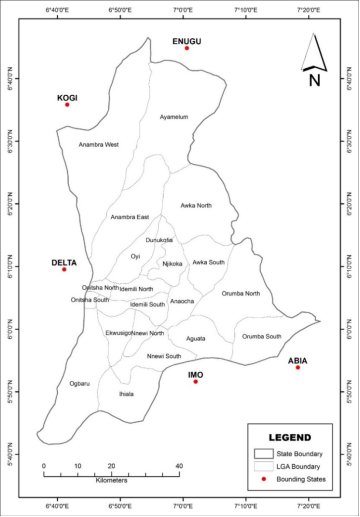
Figure 1. Map of Anambra State.
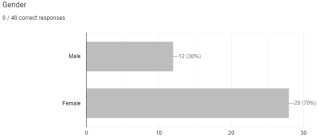
Figure 2. Gender.
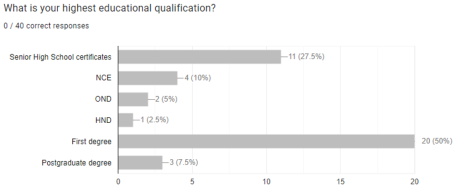
Figure 3. Educational qualifications.
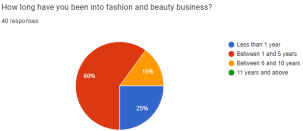
Figure 4. Years of fashion and beauty business operation.
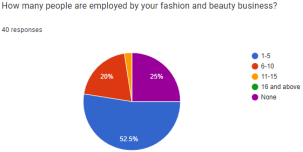
Figure 5. Number of workers employed by the fashion and beauty owners.
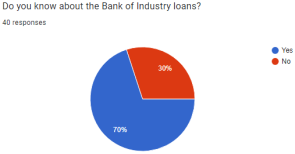
Figure 6. Awareness of the Bank of Industry loans.
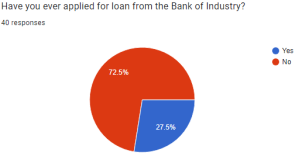
Figure 7. Application for the Bank of Industry loans.
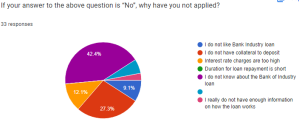
Figure 8. Reasons for refusal to apply for the BOI loan.
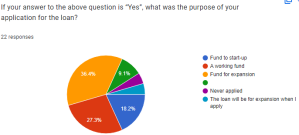
Figure 9. Rationale for applying for the BOI loan.
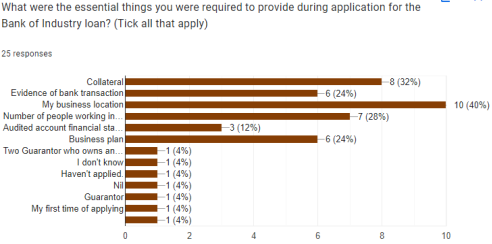
Figure 10. Requirements for application for the BOI loan.
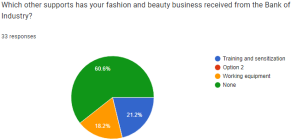
Figure 11. Non-financial supports received from the BOI.
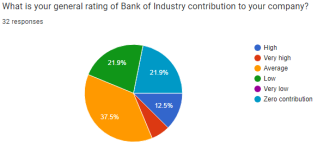
Figure 12. General rating of BOI contribution to fashion and beauty businesses in Anambra state.
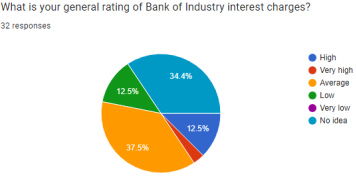
Figure 13. General rating of Bank of Industry interest charges.
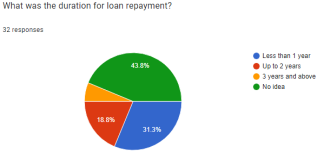
Figure 14. Duration for loan repayment.
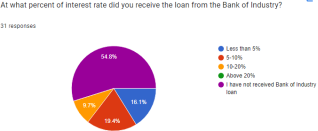
Figure 15. Evaluation of the BOI interest rates.
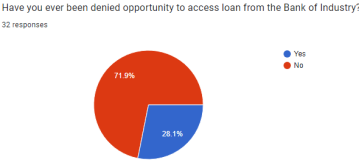
Figure 16. Evaluating the extent of the BOI loan denial.
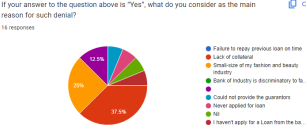
Figure 17. Reasons for the BOI loan denial.
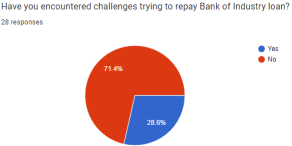
Figure 18. Challenges faced by the respondents to repay the BOI loan.
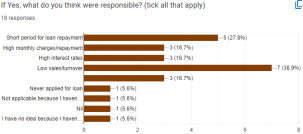
Figure 19. Reasons for loan repayment challenges.
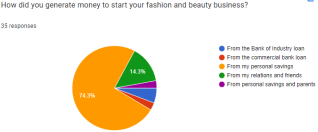
Figure 20. Sources of funds for fashion and beauty business start-ups in Anambra state.
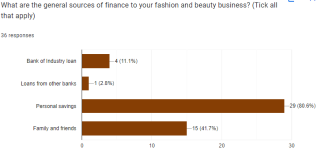
Figure 21. General sources of finance for the fashion and beauty business owners in Anambra state.
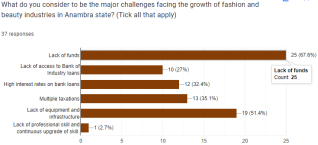
Figure 22. Major challenges facing the growth of fashion and beauty businesses in Anambra state.

Information


 Share This Article
 Twitter
 Linked In
 Facebook

 Copy
Copy Download